
Georgia Department of Corrections Release Paths
The Georgia State Board of Pardons and Paroles controls parole decisions for eligible state offenders. It can grant, deny, defer, or rescind parole and may set a tentative parole month. A tentative month is not an actual release date. Maximum release is also a different field. The label in the official record should be preserved.
Union County relevance arises when a county conviction leads to GDC custody or when a person is held at Colwell. A person who simply bonds out of Union County Jail is not on parole for that event. Court probation also follows a separate legal path.
| Board term | Meaning |
|---|---|
| Granted | Parole approved subject to the official process |
| Denied | No parole grant on that review |
| Deferred | Decision or reconsideration moved later |
| Rescinded | Earlier action withdrawn |
Confirm Georgia Department of Corrections Release
Use the Board’s offender-status instructions and Clemency Online Navigation System for the individual. Compare the name and state identifier. Then read the result beside the GDC custody record so a prison status is not confused with parole supervision.
- Find the matching GDC offender and note the GDC ID.
- Open the Parole Board offender-status route and search the individual.
- Read tentative parole month, maximum release date, decision, and current parole status exactly as shown.
- Check DCS only after the record indicates community supervision.
- Use the Board events and press pages for public meeting notices, not as a list of personal release dates.
Georgia Department of Corrections Record Requests
The Board publishes an events calendar and press releases for meeting notices and changes. Individual parole review is administrative and should not be described as a public Union County courtroom hearing. Eligibility depends on the sentence and statutes including O.C.G.A. 42-9-45 and, for covered serious violent felonies, O.C.G.A. 17-10-6.1.
Statewide parole decision system
Individual route: offender status and Clemency Online Navigation System
Meeting route: Board events and press notices
A narrow request is easier to route and less likely to return the wrong person. State whether an official copy is needed. The research did not confirm a published fee, response schedule, online retention span, or daily update time for Union County jail releases. Do not assume that a missing web record was deleted from the underlying agency files. For the case result, use the court record separately.
Georgia Department of Corrections Custody
Parole release ends prison confinement but begins conditional community status. DCS may supervise the person after release. A discharge from parole ends that supervision term. A denial, deferral, or eligibility date must never be restated as a release.
The official GDC offender query form shows the available statewide search route.
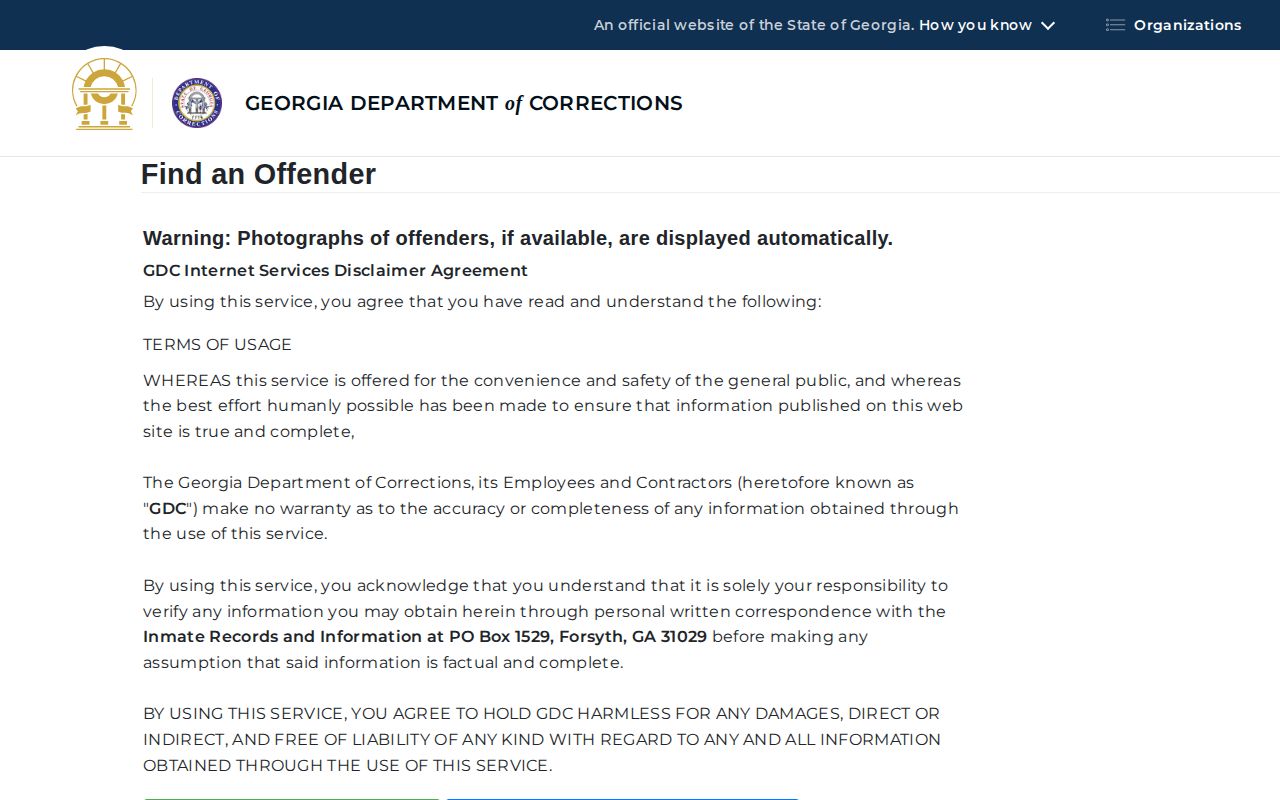
This search form is the correct starting point for a state-custody release or discharge, including a person transferred from Union County.
- Bond release
- Departure while a case continues under court-set conditions.
- Time served
- Custody credit or jail time satisfies the confinement ordered in the case.
- Detainer
- A request or legal basis for another authority to take or continue custody.
- Discharge
- An end to a custody or supervision term, depending on the issuing system.
Court jurisdiction matters too. Blairsville municipal matters may use the city court, while other charges may proceed through Union County courts. The arresting agency does not by itself identify the court or the final custody route. Match the booking number, case number, and dates across records before drawing a conclusion.
Colwell Versus County Releases
Colwell Probation Detention Center makes Union County release searches unusual. Colwell is a GDC probation detention center in Blairsville. It is not part of the county jail. A person leaving Colwell follows the state offender and supervision record path, while a person leaving Georgia Department of Corrections starts with sheriff and court records. Physical location in the same county does not merge the two systems.
Search GDC by GDC ID when known, or use name and other filters. If the person moves into community supervision, check Georgia Department of Community Supervision and parole sources as applicable. The Colwell release page details that state route. This separation prevents a county bond release from being confused with a state probation-detention discharge.
Union Jail Detainers and Transfers
Union County's Georgia Criminal Alien Track Reports add a careful local detail. The quarterly report index tracks LESC inquiries, responses, and USDHS detainers under O.C.G.A. 42-4-14 and 42-4-16. Reviewed quarters showed zero detainers in several periods and one in the first quarter of 2025. These figures are aggregate jail reports. They do not identify released people and do not prove that any named person had an ICE hold.
An immigration detainer can change the meaning of a local release entry. The sheriff may release a person from county authority while another agency continues custody. Confirm the destination on the event record. For immigration detention, use ICE's locator. For BOP custody, use the federal inmate locator. A USMS matter may require the federal case record or direct agency confirmation because there is no broad USMS public release roster.
The same caution applies to state and county holds. Ask for the receiving agency, transfer date, and any hold notation. That chain shows whether the Union County custody event was a true community release or only a handoff.
Union Jail Court Verification
The jail record answers when custody changed. The docket often answers why. The Union County Clerk of Superior Court, Georgia's eAccess directory, and re:SearchGA can help locate eligible case records. Blairsville Municipal Court is the separate channel for municipal matters. Juvenile access may be limited by law.
Look for a bond order, sentence, credit for time served, dismissal, plea, probation order, warrant recall, or transfer order. A docket entry does not always record the exact minute the jail completed processing. Pair it with the sheriff's release event. If a person had more than one charge or hold, one dismissed charge may not have ended custody. Compare all case and hold fields before concluding that the person was free.
Georgia Parole Eligibility Limits
Eligibility is only the point at which parole may be considered. It is not a promise of release. O.C.G.A. 42-9-45 governs parole eligibility and exclusions. O.C.G.A. 17-10-6.1 imposes service restrictions for covered serious violent felonies. The Board’s eligibility and guidelines material translates those rules into its process, but the individual sentence and official status control.
The Board can weigh the offense, sentence law, institutional conduct, victim input, and policy. A decision may be granted, denied, deferred, or rescinded. If a tentative month appears, check again near that period because later action can change it. Never convert eligibility, review, or a tentative month into an actual release statement.
Union Parole Record Chain
For a state sentence from Union County, begin with the county docket to confirm the sentence and conviction. Use GDC to identify the offender and custody status. Then use Board tools for parole action. After release, DCS can confirm the supervising office route. Each record owns one part of the chain.
Public Board meeting notices are useful for agency business, cancellations, and meeting dates. They do not list every individual review. The Clemency Online Navigation System and offender-status process are the person-specific channels. Save the GDC ID and exact status wording when requesting further confirmation.
Parole Date Rechecks
Recheck the offender-status record after any Board action. A tentative month can change, a grant can be rescinded, and a maximum date can remain while other status fields update. Record the date searched and the exact label. For an official explanation, use the Board channel rather than trying to infer the decision from a GDC facility change.
A parole result should also be checked against the person’s sentence and GDC ID. Similar names and old status captures can mislead. The current Board record controls the parole description, while the sentencing court and GDC retain their separate roles.
The official Georgia Parole Board page is the source for statewide parole process and status routes.
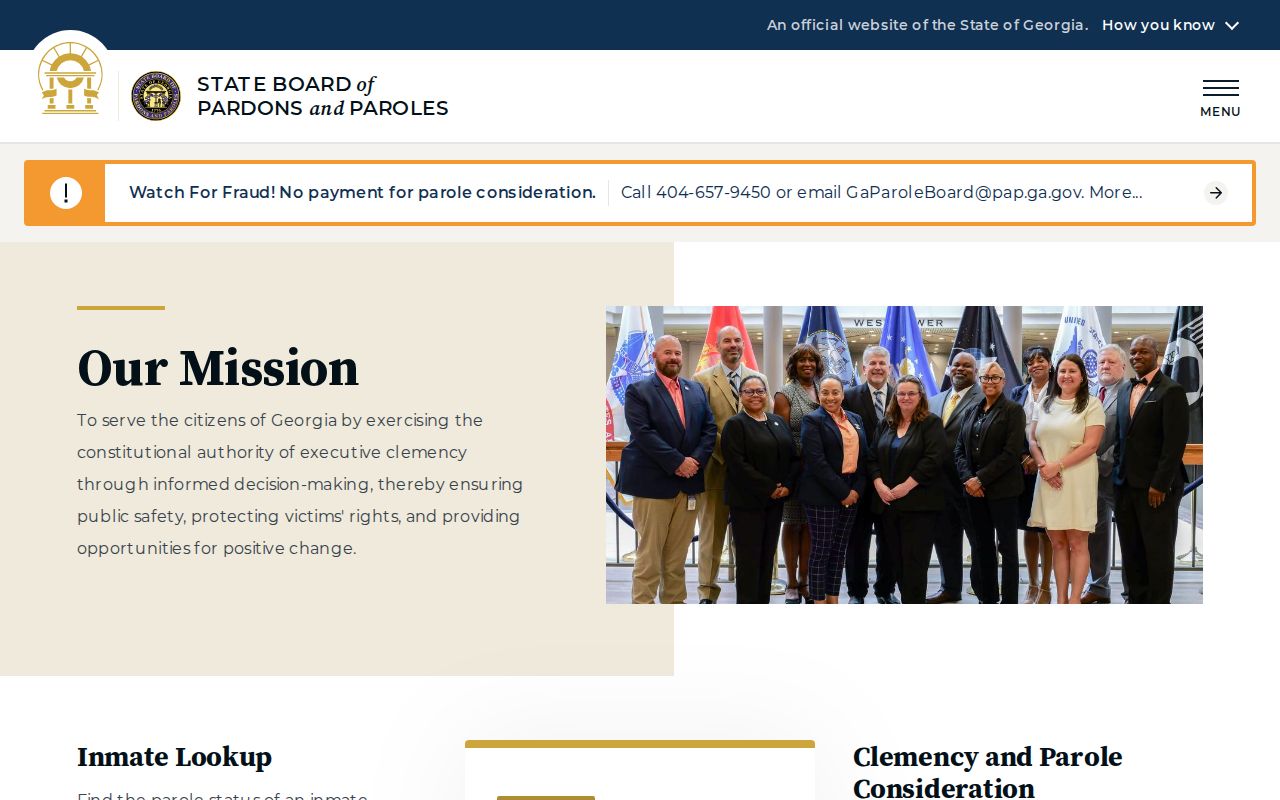
This Board view points users to parole records rather than a Union County jail release list.